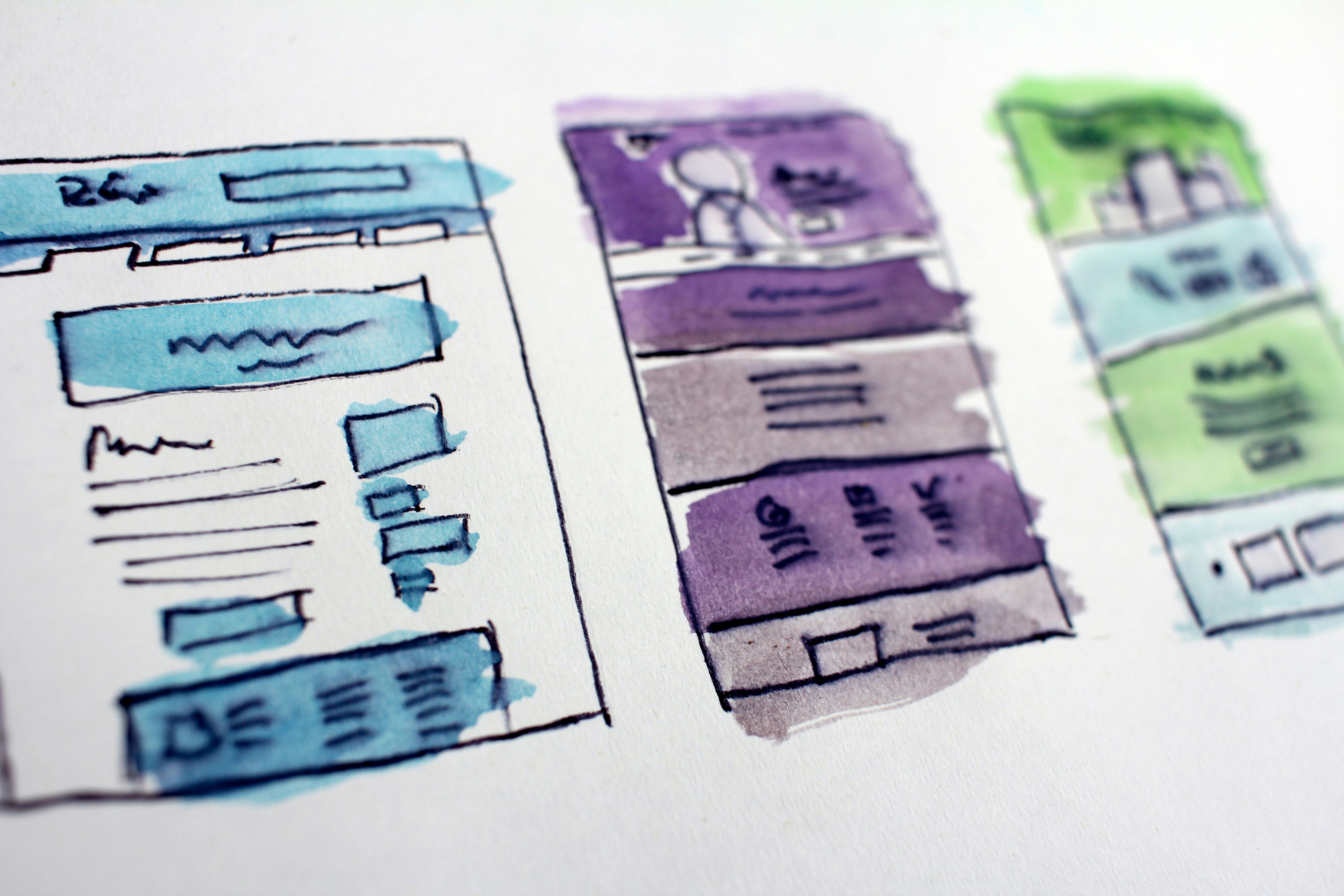
Whether it's a concert, conference or community meeting: anyone who wants to create an event website is quickly faced with the question of what makes a site really successful. In this article you will find out which technical principles, design decisions and content elements turn your event website from a mere information sheet into a real conversion tool.
The most important thing in brief
- A professional event website is your most important marketing tool before the event: it creates a first impression, explains the added value and enables registration.
- Mobile optimization, clear branding and well-placed CTAs are not extras, but basic requirements.
- SEO-friendly structure and fast loading times determine whether potential participants can even find you on Google.
- With the right event software you can create a complete event landing page including registration, ticketing and design in one tool.
Creating a successful event website is no easy task. The website for your event can have a huge impact on the success of the event. It is your digital shop window and the first impression for potential participants. But it's about more than just looking good. Your website is a central tool in your event marketing strategy: This is where you promote the event, attract registrations and make sensible use of event technology.
In this guide, we'll take a look at how to create an event website that not only looks good, but also functions well. From the basic structure to design and content to SEO and conversion optimization.
Would you like to get started straight away? Create your event for free with Streavent and have your event website online in just a few minutes.
Why your event website is more than a digital flyer
Before we get into practice: Understand what an event website really does. It is the central point of contact for everything about your event. Potential participants land here, find out more and decide whether they want to register.
Specifically, it takes on several tasks at the same time:
First impression. The website is often the first point of contact. A well-designed, fast site creates anticipation. A confusing or slow page is a deterrent even before someone has read the program item.
Information Hub. Schedule, speakers, venue, arrival, FAQs: Everything participants need to know belongs on the website. The fewer queries via email, the better for your team.
Registration and ticket sales. The website closes the circle: arouse interest, communicate added value, enable registration. If the registration process is complicated, you will lose registrations, even from people who actually wanted to come.
Marketing and sponsorship. A professional event website not only impresses participants, but also sponsors and partners. It signals: This event should be taken seriously.
Domain and hosting: What you really need
If you host multiple events a year, you probably already have a main domain. In this case, you simply create a subpage or subdomain for the respective event.
If you're starting from scratch: Choose your domain and hosting based on three criteria.
Accessibility and loading speed. Your website must be stable, even if many people access it at the same time, for example immediately after sending an invitation email. Look for guaranteed uptime and fast servers in the DACH region. Providers such as All-inkl, Strato or IONOS are common options for simple event sites in Germany.
Data protection and GDPR. Server location Germany or EU is not a nice-to-have for professional B2B events. Participant data must be processed in accordance with GDPR.
Domain name with SEO potential. Name your domain as close as possible to the search term you want to be found for. If you regularly organize wellness events, "wellness-events.de" better than "my-events.de". You get an immediate organic relevance bonus.
Important: If you use an all-in-one event platform like Streavent, the question of separate hosting for the event landing page is largely eliminated. The page is created, hosted and linked to the registration directly in the platform. This saves effort and ensures that design, registration and participant management work seamlessly together.
Design for your audience: navigation, responsiveness and branding
Navigation and structure
Your event website must work at first glance. Think about it: What is someone looking for when they land on the site?
Typically these are:
- Date, time, location
- Program and speakers
- Registration option or ticket purchase
- Contact or FAQ
This information must be accessible without scrolling or searching. A clear menu, clear sections, and visible CTAs are not a design issue, but a conversion issue.
Mobile optimization
Most of your audience will access the event website on their smartphone, especially after sending an invitation email or a LinkedIn announcement. A design that is not mobile-friendly costs registrations.
Modern page builders provide mobile-responsive layouts as standard. Nevertheless, actively test your site on at least two different devices before sending the invitation email.
Visual branding and consistency
Your event website is a direct reflection of your brand. The same colors, fonts and logos as in your invitation emails, presentations and promotional materials. Consistency builds trust and makes the event more memorable.
Use high-quality images that fit the event. Photos from past events, speaker portraits, venue impressions. Archive or stock photos appear unprofessional and send the wrong signal, especially if you want to convince 500 participants.
Content that converts: What belongs on every event website
Content is king, and this also applies to event websites. The content should not only inform, but also convince and encourage you to register.
The most important elements
Captivating headline. The H1 of the page must immediately make it clear what it is about and arouse interest. Not "Welcome to our annual event", but "Europe's leading conference for sustainable business management, September 12, 2025 in Munich".
Event overview. Date, location, target group, core topic: everything at a glance. New visitors decide in seconds whether the event is relevant to them.
Program and speakers. Detailed information about sessions, timeslots and speakers. Biographies with photos significantly increase credibility. The following applies to B2B events: The quality of the speakers is often the strongest selling argument.
Social proof. Voices from previous participants, logos of well-known companies that were at the last event, numbers from the previous year (e.g. “580 participants, 42 speakers, 18 countries”). Trust comes from evidence, not promises.
Practical details. Arrival, parking, hotel recommendations, accessibility: What sounds like a trivial matter actually noticeably reduces the amount of email support needed before the event.
Place CTAs correctly
Every event website needs clear calls to action. Three basic rules:
- The primary CTA (“Register now” / “Buy ticket”) must be visible above the fold, i.e. accessible without scrolling.
- Repeat the CTA after each content-dense section. Anyone who is convinced after the speakers shouldn't have to scroll to the bottom of the page.
- Formulate the CTA specifically: “Secure a free place now” converts better than “Register”.
SEO for your event website: How to get found on Google
An event website that no one can find is of little help to you. Basic SEO measures take little time and can make the difference between 50 and 500 organic visitors.
Keyword research before you start
Think about what terms potential participants would type into Google. Examples: “Corporate Management Congress 2025”, “HR Conference Munich”, “Continuing Event Manager Training Online”. Use these keywords in the page title, URL slug, meta title and meta description.
Technical basics
- Loading speed: Google rates slow sites lower. Compress images, do not load unnecessary plugins.
- SSL certificate: HTTPS is mandatory. No browser shows unencrypted pages without warning anymore.
- Meta title and meta description: Complete individually for each event page. The title should contain the keyword and the event name, and the description should communicate the specific added value.
- Structured data (event schema): With event schema markup, Google understands that this is an event page and can display the date, location, and tickets directly in search results.
Content that ranks in the long term
If you regularly organize events, it's worth having a content page or blog around the topic of your event. An association convention might publish accompanying articles on association management, member engagement, or event planning. This brings organic traffic that generates registrations in the long term.
Registration and ticketing directly on the website
Registration is the moment your entire website is working towards. This is where it is decided whether you will be registered or not.
Three common mistakes:
Too many mandatory fields. Only ask what you really need. Name, email address and, if applicable, company are sufficient for most B2B events. You can inquire about everything else after registering.
External redirects. If your participants are redirected to a completely different platform to register, you will lose trust and registrations. A registration form embedded directly into the website is significantly more powerful.
No confirmation email. Immediately after registration, an automatic confirmation email should be sent out with all the details. This is not an extra, but a matter of course.
With Streavent you create registration forms, ticketing and event website in one tool. Check out the registration feature and see what it looks like in practice.
Create an event website with an all-in-one platform
The classic way to create an event website means: buy a domain, set up hosting, learn page builder, integrate registration form, connect payment provider, adjust privacy policy. This takes time that you should rather invest in the event concept.
With a specialized event platform like Streavent, most of this effort is eliminated. You create the event website directly in the platform, with ready-made templates, corporate design options and directly integrated registration and ticketing flow.
This means specifically:
- Event landing page and registration form in one system
- Automatic confirmation emails and reminders
- Real-time participant lists that you can use directly in the check-in system
- GDPR-compliant hosting in Germany
For teams that organize several events per year, this is not a convenience feature, but rather a real time saver.
Book a demo and see how other event teams use Streavent to set up their event website.
FAQ: Creating an event website
How long does it take to create an event website?
With a specialized tool like Streavent, you can create a simple event website including a registration form in 1 to 2 hours. More complex pages with individual design, program pages and multiple ticket categories require 4 to 8 hours, depending on the scope.
Do I need my own domain for my event website?
Not necessarily. If you already have a company website, you can embed the event as a subpage (e.g. company.de/event-2025). For recurring events or independent conferences, it is worth having your own domain with an event-specific name and keyword relevance.
What information must be on an event website?
At least: date, time, location (including directions), program or agenda, speakers with a short biography, registration option and contact information. For B2B events, we also recommend: target group, networking opportunities, social proof from past events and FAQs on parking, accommodation and accessibility.
How do I optimize my event website for Google?
The most important measures: Use keywords in H1, meta title and meta description, optimize loading time, activate SSL certificate, integrate event schema markup (so that Google displays the date and location directly in the search results) and ensure mobile optimization. For regular events, it is also worth having a content area around the topic of the event.
Can I integrate registration and ticketing directly on the event website?
Yes, and you should. External redirects for registration cost conversions. With a platform like Streavent, the registration form, ticketing and event website are integrated into one system, so participants never have to leave the page.
Conclusion: Create an event website that really works
A good event website is not a design project, but a conversion project. It has to load quickly, work on mobile phones, communicate the added value of the event immediately and make the registration process as short as possible.
The most important levers summarized:
- Align structure and navigation consistently with the questions of the participants
- Consistent branding, from the website to the confirmation email
- Place CTAs visibly, don’t hide them at the end
- Integrate registration directly, no external redirects
- Consider SEO basics right from the start, not as post-processing
If you want to do all this in one tool without connecting five different systems: Create your event for free with Streavent or book a short demo and we'll show you in 30 minutes how to get your event website online in just a few minutes.